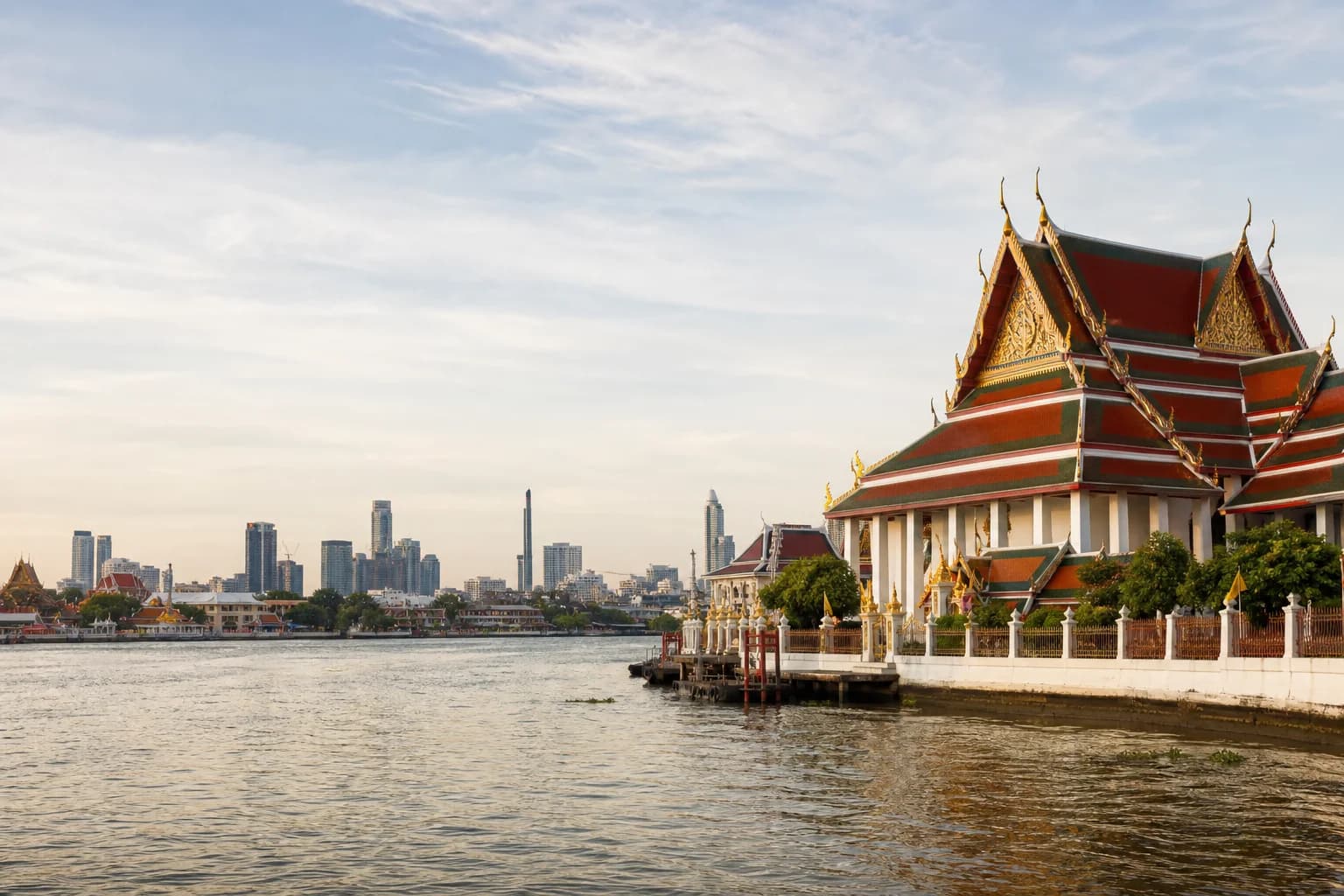
Bangkok is not a city that rewards overplanning.
It is too hot, too layered, too traffic-sensitive, and too spread out for the kind of itinerary that looks efficient on paper but feels exhausting by mid-afternoon. The better way to approach Bangkok is to choose a good base, reduce unnecessary cross-city movement, anchor each day around one clear area, and leave enough space for heat, traffic, meals, hotel time, and changes of plan.
This three-day itinerary is designed for travelers who want Bangkok to feel rich, atmospheric, and manageable. It is not a checklist of every major sight. It is a calmer structure for seeing the city with less friction: one soft arrival day, one culture-focused day, and one flexible final day shaped around food, wellness, shopping, or neighborhood exploration.
The Quiet Atlas view is simple: Bangkok can feel overwhelming if planned badly, but it becomes much easier when you stop treating it like a city to conquer and start treating it like a set of carefully chosen anchors.
Who this itinerary is for
This itinerary is best for first-time visitors who want to understand Bangkok without spending three days in taxis, queues, and overheated sightseeing loops.
It works especially well for:
- couples who want a beautiful but realistic first Bangkok trip;
- design-conscious travelers who care about hotels, restaurants, atmosphere, and neighborhoods;
- travelers using Bangkok as the first stop in Thailand;
- people who want temples, food, river atmosphere, and a little wellness without overloading the schedule;
- travelers who prefer fewer, better plans instead of a packed list;
- anyone who enjoys a city more when the logistics are calm.
It is not ideal if your main priority is nightlife, shopping malls all day, or trying to see every temple and market in one short stay. Bangkok can support all of those trips, but this is not that itinerary.
This version is built around comfort, timing, and movement strategy.
Quick answer: the calmest way to structure three days in Bangkok
Day 1: Soft landing and orientation Arrive, settle into your hotel, stay close to your chosen area, and use the river or a gentle neighborhood walk to get a first sense of Bangkok. If energy allows, add one cultural or atmospheric stop, not three.
Day 2: Culture without overload Use the morning for Bangkok’s historic and temple side, then slow down in the afternoon with lunch, a hotel break, a gallery, a café, or a quieter design-led stop. Keep the evening close to your hotel or in one easy-to-reach dining area.
Day 3: Choose your Bangkok Pick one direction: wellness and spa time, food and cafés, shopping and design, or a slower neighborhood day. The final day should deepen the trip, not exhaust you before leaving.
The whole itinerary is built on one rule: one main area per half-day is usually enough.
Where to stay before following this itinerary
Your hotel area matters more in Bangkok than in many cities. A poor base can turn a good itinerary into a slow negotiation with traffic. A good base gives the trip rhythm.
For a low-stress three-day stay, think in terms of area logic rather than just hotel aesthetics.
Riverside: best for atmosphere and a softer arrival
The riverside is often the most emotionally pleasant way to begin Bangkok. It gives the city space, light, and a sense of arrival that can be harder to find inland. For travelers who want a more cinematic Bangkok, the river can be a strong base, especially if the hotel itself is part of the experience.
The trade-off is movement. Riverside stays can be beautiful, but they may require more planning for restaurants, shopping, and some cross-city activities. The river can help with access to the historic area, but not every plan will be direct.
Choose riverside if you want atmosphere, hotel time, slower mornings, and a softer version of Bangkok.
Sukhumvit: best for convenience, restaurants, and BTS access
Sukhumvit is often the easiest base for travelers who want restaurants, shopping, cafés, nightlife options, and access to the BTS Skytrain. It is not the quietest or most poetic Bangkok, but it is practical.
The trade-off is that Sukhumvit can feel busy, commercial, and uneven. The exact hotel location matters. Being close to useful transit and good restaurants can make the stay much smoother.
Choose Sukhumvit if convenience matters more than postcard atmosphere.
Silom and Sathorn: best balanced central base
Silom and Sathorn can work well for travelers who want a central base with access to restaurants, business-district polish, park time, and relatively good movement options. This area can feel more composed than parts of Sukhumvit while still being practical.
The trade-off is that the neighborhood feel changes street by street. Some parts are polished and convenient, others are less atmospheric.
Choose Silom or Sathorn if you want balance: central, practical, and less obviously tourist-coded.
Old City: best for temples and heritage, but less convenient overall
The Old City can make sense if your Bangkok priority is temples, heritage streets, the Grand Palace area, Wat Pho, and slower historic atmosphere. It can be rewarding, but it is not the easiest base for every traveler.
The trade-off is transport. Depending on the exact hotel, you may be less connected to the BTS network, and evening dining or shopping plans may require more effort.
Choose the Old City if your trip is centered on heritage and you do not mind a slower, more localized stay.
Quiet Atlas recommendation
For most first-time travelers, the calmest choices are:
- Riverside, if you want beauty and hotel atmosphere.
- Silom/Sathorn, if you want balance.
- Sukhumvit near useful transit, if you want convenience and restaurants.
Avoid changing hotels during a three-day Bangkok stay. The time you lose packing, transferring, checking in, and recalibrating is rarely worth it.
What this itinerary deliberately skips
A low-stress itinerary is as much about what you leave out as what you include.
This plan deliberately avoids:
- crossing Bangkok multiple times per day;
- visiting too many temples in one morning;
- forcing a far-flung market into a short trip;
- treating every evening as a separate cross-city event;
- moving hotels during a three-day stay;
- planning outdoor sightseeing during the hottest part of the day;
- assuming taxis will always be quick;
- building the trip around restaurants or venues that have not been checked recently.
It also avoids the classic mistake of making Bangkok a list of attractions. The city is more enjoyable when your days have rhythm: morning anchor, cooling break, evening atmosphere.
Best time to use this itinerary
For most travelers, this itinerary is easiest from November to February, when Bangkok generally feels more comfortable than during the hottest part of the year. Thailand’s official tourism information describes the country’s climate as shaped by monsoon patterns, with wet, cooler/dry, and hot periods, and average temperatures ranging broadly from 18°C to 38°C. [Tourism Thailand’s climate guide](https://www.tourismthailand.org/Plan-Your-Trip/Weather?province=219) is a useful starting point for seasonal planning.
That does not mean Bangkok is unpleasant outside the cooler months. It means the itinerary should change.
In hotter months, reduce outdoor sightseeing, start earlier, build in more hotel time, and use air-conditioned breaks more deliberately. In rainy months, keep the structure flexible and avoid making the whole day depend on one outdoor plan.
The important seasonal rule is not “only go in perfect weather.” It is this: do not plan Bangkok as if heat and rain are minor details.
They are part of the trip design.
The goal of Day One
Day One should help you arrive properly. Bangkok is not the best city for an aggressive first day, especially after a long-haul flight.
The goal is to check in, adjust, understand your immediate area, and get one atmospheric first impression without pushing too hard.
This is the day to resist the urge to “make the most of it.” You will enjoy Bangkok more if you do less at the beginning.
Arrival: make the first move easy
If you land in the morning, your first priority is not sightseeing. It is recovery and orientation.
A calm first-day plan looks like this:
- get to the hotel without overcomplicating the transfer;
- leave bags if the room is not ready;
- eat something simple nearby;
- avoid committing to a distant plan before you know your energy level;
- use the first few hours to understand the hotel’s immediate area.
If you arrive late afternoon or evening, simplify even more. Check in, shower, have dinner close to the hotel, and save the city for the next morning.
For a first Bangkok stay, an airport transfer can be worth considering if you arrive tired, late, with luggage, or during a humid period. It is not always the cheapest option, but it can be the lowest-friction one.
If you arrive at Suvarnabhumi and your hotel is near a useful connection, the Airport Rail Link can also be practical. The Airport Rail Link connects Suvarnabhumi Airport with Phaya Thai and Makkasan, linking into Bangkok’s wider rail network. [Bangkok Airport Online’s Airport Rail Link guide](https://www.bangkokairportonline.com/bangkok-airport-rail-link/) describes the line as operating between the airport and the city, with connections to BTS/MRT.
Afternoon: choose one gentle orientation
Your first outing should be close to your base or easy to reach.
If you are staying riverside, keep the first day around the river. Walk near the hotel, take in the light, and let the city feel spacious before it feels busy. The river is one of Bangkok’s best soft-landing tools because it gives movement without the same sensation of being trapped in traffic.
If you are staying in Sukhumvit, choose a nearby café, spa, or mall-adjacent walk rather than forcing a heritage itinerary immediately. Sukhumvit is not the city’s most atmospheric first impression, but it is convenient, and convenience matters on arrival day.
If you are staying in Silom or Sathorn, a park walk, a hotel break, and dinner nearby can be enough. The first day should not require complex transport.
If you are staying in the Old City, a gentle walk through the historic area can be rewarding, but be careful with heat and timing. Do not try to “just add” every nearby temple.
Optional cultural anchor
If your energy is good, add one cultural anchor.
That might be a temple complex, a museum, or a historic neighborhood walk. Keep it singular. Do not combine multiple major sights on the first day unless you arrived rested and early.
The Grand Palace and Wat Phra Kaew area can be an important cultural anchor. The official Grand Palace visitor page lists opening hours as daily 8:30 AM to 4:30 PM, with tickets sold from 8:30 AM to 3:30 PM, and notes a foreign visitor ticket price of 500 baht at the time of review. It also lists dress-code restrictions and access options by BTS, MRT, taxi, bus, and boat. [Grand Palace practical information](https://www.royalgrandpalace.th/en/visit/practical-information)
For this itinerary, treat major temple or palace visits as morning activities whenever possible, not late-day filler.
Evening: dinner close to your base
On the first evening, dinner should be easy. Bangkok has extraordinary food, but your first night is not the best time to build a complex dining plan across town.
Choose one of these approaches:
- dinner at or near the hotel;
- a restaurant within a short ride;
- a riverside meal if staying near the river;
- a casual local option that does not require a long transfer;
- a low-pressure reservation if you know your arrival schedule.
If you want the first evening to feel special, make the hotel choice do more of the work. A good hotel bar, river view, calm restaurant, or thoughtful lobby can make the night feel polished without turning it into a logistics exercise.
Day One stress note
The most common mistake on Day One is planning as if arrival fatigue does not exist. Bangkok is sensory, humid, and spread out. A softer first day is not wasted. It makes Day Two better.
The goal of Day Two
Day Two is the main culture day. This is where you give Bangkok your best energy, ideally in the morning, before heat and traffic make every decision feel heavier.
The day should have one main cultural zone, one proper rest break, and one evening plan.
Not four temples, two markets, a mall, a rooftop bar, and a dinner across town.
Morning: one major cultural area
Start early if possible. Bangkok’s cultural sights are easier when you arrive before the day becomes too hot and crowded.
A strong low-stress version of the morning could include:
- one major temple or palace area;
- one nearby supporting stop;
- a short walk only if the heat is manageable;
- a planned exit point before fatigue sets in.
If you choose the Grand Palace and Wat Phra Kaew area, dress carefully and check the official visitor page before going. The Grand Palace page states that visitors must dress appropriately because the site is a place of reverence, and lists prohibited clothing including sleeveless shirts, short tops, see-through tops, short pants, torn pants, tight pants, bike pants, and mini skirts. [Grand Palace dress code and visitor information](https://www.royalgrandpalace.th/en/visit/practical-information)
A quieter alternative is to choose one temple plus a slower riverside or Old City walk. Bangkok is not more meaningful because you saw five sacred sites in one morning. It is often more memorable when you have enough space to notice one properly.
Midday: plan for heat, not against it
Midday is where many Bangkok itineraries fall apart.
Instead of forcing another major sight, use the middle of the day for:
- lunch in the same general area;
- an air-conditioned museum or gallery;
- a hotel break;
- a spa appointment;
- a calm café;
- a slow transfer back toward your base.
This is not laziness. It is good Bangkok planning.
If your hotel is strong, use it. A three-day trip is too short to book a beautiful hotel and never spend time there.
Afternoon: design, gallery, café, or rest
The afternoon should depend on your energy.
If you want more culture, choose a museum or gallery that fits your route. If you want softness, return to the hotel. If you want a more modern Bangkok experience, choose a design or café-led neighborhood rather than another major landmark.
This is also a good time to use the city’s rail system where practical. Bangkok’s BTS Skytrain site provides route, fare, area map, and timetable information, which makes it useful for checking whether a route is actually convenient before committing to it. [BTS Skytrain official site](https://www.bts.co.th/eng/)
The Quiet Atlas movement rule: do not choose transport based only on what looks fastest on a map. Choose the route that requires the fewest decisions in heat.
Evening: one polished plan
For the second evening, you can plan something more intentional.
Good options include:
- a restaurant reservation in your hotel area;
- a riverside dinner;
- a rooftop or bar if it is easy to reach and fits your style;
- a night market only if you genuinely want that energy;
- a calm hotel evening if the day was full.
If you choose a restaurant across town, make it the point of the evening. Do not stack it after a long late-afternoon activity in a different area.
Day Two stress note
Culture in Bangkok is best approached with respect and margin. Dress rules, heat, crowds, and traffic can all change the texture of the day. A good itinerary leaves room for those realities instead of pretending they are small details.
The goal of Day Three
Day Three should not feel like leftovers. It should be the day where the trip becomes personal.
By now, you know whether you want more food, more wellness, more shopping, more design, or simply a slower day before leaving Bangkok.
Choose one of the following paths.
Option A: Wellness and hotel-led Bangkok
Choose this if you booked a strong hotel, feel tired from the first two days, or want Bangkok to feel restorative rather than intense.
A wellness-led day could include:
- slow breakfast;
- spa or massage appointment;
- pool or hotel time;
- a short nearby outing;
- early dinner;
- packing or onward travel preparation.
This option is especially good if Bangkok is the first stop in a longer Thailand trip. It prevents you from arriving at the next destination already depleted.
Quiet Atlas view: a restorative Bangkok day is not a missed opportunity. It may be the difference between enjoying the trip and dragging yourself through it.
Option B: Food, cafés, and neighborhood texture
Choose this if food is one of your main reasons for visiting Bangkok, but you do not want a chaotic eating marathon.
Build the day around one neighborhood or one dining corridor. Add cafés, small shops, and one planned meal rather than trying to sample the entire city.
A calm structure could be:
- late breakfast or coffee;
- neighborhood walk;
- lunch or tasting stop;
- hotel rest;
- dinner reservation;
- optional short evening walk.
Do not make every meal a cross-city journey. In Bangkok, the best food day is often the one where the movement between meals feels easy.
Option C: Shopping, design, and city comfort
Choose this if you enjoy Bangkok’s polished urban side: malls, design stores, beauty, interiors, and air-conditioned wandering.
This can be a very low-stress final day because it works well in hot or rainy weather. It is also practical if you need to buy gifts, prepare for an island trip, or keep the day flexible before an evening flight.
A good shopping/design day should still be selective. Pick one main area and keep the rest optional.
Good logic:
- choose one retail/design cluster;
- avoid crossing the city for a single shop;
- plan lunch nearby;
- keep a flexible block for hotel rest or packing;
- avoid peak traffic transfers where possible.
Quiet Atlas view: Bangkok’s comfort infrastructure can be part of the trip. Not every good travel day has to be rustic, local, or difficult.
Option D: A slower local day
Choose this if you want less structure.
A slower final day could include:
- a morning walk near your hotel;
- one café or market;
- a massage or quiet break;
- a single late lunch;
- reading, pool time, or packing;
- one final dinner nearby.
This works best when your hotel area is well chosen. It is the strongest argument for not booking a random hotel just because the room photographs well.
In Bangkok, location is not a detail. It is the trip.
Bangkok is not impossible to navigate, but it punishes unrealistic routing.
A low-stress movement strategy uses different transport for different purposes.
Use BTS and MRT where they make sense
The BTS and MRT are often useful for moving between central areas, shopping districts, business districts, and some hotel zones. They can reduce exposure to road traffic and make timing more predictable.
But they are not a universal solution. Some of Bangkok’s most atmospheric or heritage-focused areas are not always directly convenient from every station-connected hotel. Always check the actual walking time at both ends, not only the station-to-station route.
Use river movement deliberately
The Chao Phraya can be both practical and atmospheric, especially for riverside stays and historic-area access. The official Grand Palace visitor page lists boat access via the Chao Phraya among public route options to the site. [Grand Palace access information](https://www.royalgrandpalace.th/en/visit/practical-information)
River movement can make Bangkok feel calmer, but it still requires planning: pier location, walking distance, heat, and timing all matter.
Use cars when they reduce decision fatigue
A car or ride-hailing option can be the easiest choice when:
- you are tired;
- you are dressed for dinner;
- it is raining;
- the destination is not near a useful station;
- you have luggage;
- you are arriving late;
- the walking segments would be unpleasant.
The mistake is not using cars. The mistake is assuming every car ride will be quick.
Be careful with tuk-tuks
Tuk-tuks can be atmospheric, but they are not automatically low-stress. The official Grand Palace visitor page warns that tuk-tuks can cost more than taxis for short distances if visitors are not used to bargaining. [Grand Palace practical information](https://www.royalgrandpalace.th/en/visit/practical-information)
For a calm first trip, use them selectively rather than as your default transport plan.
The Quiet Atlas Bangkok movement rule
Plan days by area, not by attraction count.
If your itinerary requires you to cross Bangkok three times in one day, the itinerary is probably the problem.
Bangkok rewards a little preparation.
Hotel
Book the hotel first, and choose it based on area logic, not just room design. For a three-day trip, the right location will matter every day.
Airport transfer
Consider booking an airport transfer if you arrive late, tired, with luggage, or during a period of heat or rain. It is not always necessary, but it can make the first hour of the trip much easier.
Key restaurants
If your trip is food-led, reserve important dinners ahead where required. For this guide, keep restaurant planning area-based unless you have recently checked opening days, reservation rules, and current quality.
Spa or wellness appointments
If wellness is part of the trip, book one appointment rather than hoping for the best on arrival.
eSIM
A working data connection makes Bangkok easier: maps, hotel messages, ride apps, translation, restaurant booking, and route checks all depend on it. An eSIM is especially useful if you want to avoid sorting connectivity at the airport.
Travel insurance
For Thailand, travel insurance is worth considering, especially if your trip includes multiple flights, ferries, activities, weather-sensitive plans, or non-refundable bookings.
A hotel should not be included in this itinerary only because it photographs well. For this kind of Bangkok trip, the right hotel should make the city feel easier.
Before booking, check:
- exact location and nearby transit or pier access;
- recent guest reviews;
- room noise notes;
- breakfast and dining quality;
- pool/spa usefulness if relevant;
- transfer convenience;
- cancellation policy;
- whether the area fits this itinerary.
Best for soft arrival
Look for riverside or calm hotel atmosphere, strong arrival experience, good breakfast, and easy first-night dinner.
Best traveler fit: couples, first-time Bangkok visitors, long-haul arrivals.
Best for convenient movement
Look for access to BTS or MRT, good restaurants nearby, minimal walking friction, and easy ride-hailing pickup.
Best traveler fit: first-time visitors who want flexibility.
Best for culture-focused stays
Look for proximity to Old City sights, heritage atmosphere, and easy morning access to temples.
Best traveler fit: travelers who prioritize historic Bangkok over shopping and nightlife.
Best for wellness
Look for spa quality, pool, calm rooms, comfortable public spaces, and a low need to leave the hotel constantly.
Best traveler fit: travelers using Bangkok as a decompression point.
Pack for temple visits
For major temples and royal sites, modest clothing matters. The Grand Palace official visitor page lists several prohibited clothing types, including sleeveless shirts, short tops, see-through tops, short pants, torn pants, tight pants, bike pants, and mini skirts. [Grand Palace dress code](https://www.royalgrandpalace.th/en/visit/practical-information)
A safe approach is to pack:
- lightweight long trousers or a long skirt;
- a top that covers shoulders;
- comfortable shoes that are easy to remove;
- a light layer that can handle air-conditioning.
Plan around heat
Do the most exposed sightseeing early. Use the middle of the day for lunch, hotel time, shopping, spa, galleries, or transit.
Keep one flexible block per day
Bangkok is better when you can respond to energy, weather, and traffic. Do not schedule every hour.
Avoid too many area changes
One main area per half-day is a good rule. More than that can make the city feel harder than it needs to.
Keep cash and cards practical
Payment habits can vary by venue, market, transport type, and neighborhood. For travelers, it is sensible to have both a card and some local currency.
Use connectivity from the start
Have data working before you need it. Bangkok is much easier when maps, ride apps, restaurant messages, and translation tools are available.
Day One: Soft landing
Best for: arrival, orientation, river or neighborhood atmosphere.
Suggested rhythm:
- arrive and check in;
- stay close to hotel;
- take one gentle walk or river-oriented outing;
- add one cultural stop only if energy is good;
- have dinner nearby.
Stress level: low, if you resist overplanning.
Day Two: Culture and atmosphere
Best for: temples, heritage, galleries, design, and one stronger evening plan.
Suggested rhythm:
- early cultural anchor;
- lunch nearby;
- hotel or cooling break;
- gallery, café, or design stop;
- dinner in one easy area.
Stress level: medium, lower if you start early and avoid cross-city hopping.
Day Three: Choose your Bangkok
Best for: personalizing the trip.
Choose one path:
- wellness and hotel day;
- food and cafés;
- shopping and design;
- slower local day.
Stress level: low to medium, depending on how much movement you add.
Bangkok is best in three days when treated as a city of anchors, not a checklist.
Choose the right hotel area, keep each day geographically sensible, see fewer places properly, and let the city unfold through atmosphere, food, river light, temples, hotel time, and well-timed pauses.
A rushed Bangkok trip can feel hot, loud, and fragmented. A better Bangkok trip feels layered, generous, and surprisingly calm.
The difference is not how much you do.
It is how intelligently you move.
Some links may earn Quiet Atlas a commission at no extra cost to you. Recommendations are selected for editorial fit, usefulness, and travel ease.
Suggested modules for this guide:
- hotel cards by area;
- eSIM before arrival;
- travel insurance;
- airport transfer;
- selected booking CTA once hotel recommendations are added.
- Thailand climate and weather: [Tourism Thailand Climate & Weather](https://www.tourismthailand.org/Plan-Your-Trip/Weather?province=219)
- Grand Palace opening hours, ticket window, dress code, and access notes: [The Grand Palace Practical Information](https://www.royalgrandpalace.th/en/visit/practical-information)
- Suvarnabhumi Airport Rail Link overview: [Bangkok Airport Rail Link](https://www.bangkokairportonline.com/bangkok-airport-rail-link/)
- BTS route and travel information: [BTS Skytrain](https://www.bts.co.th/eng/)